

I was diagnosed with complex post traumatic stress disorder in 2020, after a 2019 incident at work: a man I worked with who was senior to me touched my body without permission. I worked for an additional eight months until a 12 hour panic attack and my doctor told me I had two choices:
1. Be signed off work for stress,
2. Be signed into the cardiac ward in about a month.
I only returned to that office again once, about six months later to pack up my desk and take home my belongings. I was on long-term disability and attending regular teleconference group sessions through Workers Compensation Board – the WCB. It was Covid and everything was locked down the pandemic heightened a lot of the changes I was going through, and like so many of us I lost a majority of my social circle.
I felt strangely fragile: I was angry a lot because I had lost the career I had spent 20 years building, and I felt abandoned because so many of the people I worked with faded into the background. I also felt invincible: “Come on buddy if you think you can hurt me!” became a default defense mechanism.
(This is when I learned the most belligerent are often the least secure in real time.) I had grandiose dreams of revenge that interrupted the work I needed to do to heal. Or maybe the grandiose dreams were part of healing?, I don’t know. I do know the more I focused on revenge, the harder it was to create a life I liked.
Rebuilding my career
Mid 2021 I had this mad idea to be a consultant and coach, so I joined a government-sponsored program offered through Employment Insurance to start my own company. I attended the workshops, did some additional trainings after completing with the WCB ‘rehabilitation’ program.
The entrepreneurship training may have worked for some people, but not for me. I was still adrift – I was beginning to understand the practice of business but I hadn’t begun to understand the work required by me to be successful, or even pay the rent consistently.
I carried a lot of really unhealthy beliefs about myself, and what a good life is. Like many people who struggle with mental health, I spent a lot of time reflecting on the things I had done wrong, trying to figure out how to be right. I catastrophized, Black and White thinking was my favourite sport.
This sport paralysed me and action was usually driven by a self-righteousness that in hindsight probably could have led me to success. But it also left me feeling exhausted at the end of the day.
I did some really cool presentations, met people excited to be starting new careers and people deeply committed to careers they’d had for years. Rarely did I come across people who didn’t want to work. I also found leadership struggling to understand how the culture they were creating and maintaining was failing to improve employee morale.
I fantasised about how to solve these problems, I imagined being at the front of rooms telling people what Five Steps to Success they needed to take. But my creativity was nowhere to be found and eventually the consulting and training dried up.
Starting my “Dream Job”
After a few months of fits and starts – a small contract here and there, a couple of coaching clients – I threw in the entrepreneurial towel and began looking for a job. In a lot of ways I was lonely. The last two years had been mainly just me and my kids (I’m a single mum of two) as the world shut down and opened up. I needed to meet new people.
In 2022 I went back to work as an employee. The WCB had ‘passed’ me to go back to work, a year earlier and finally I found a job I wanted with my whole heart. I had applied for several and been through the interview process but so far nothing had worked out. I kept looking.
Until this one, I really wanted this. It was non-profit working in an area deeply important to my personal identity. I reached out to what remained of my network, sent some rather cringey emails. got an interview, and was offered the job a few weeks later. I started roughly two and a half years after leaving my former employer on disability.
Returning to work was not the exciting, invigorating experience I was hoping for. I mean, the first few days were full of nerves and the projects were exciting; there were moments that caught me off guard. It was a growth opportunity and like most growth opportunities, it was deeply uncomfortable. I was SO nervous. Way more than I had been for any other job, but I figured it was just because I wanted this one so much.
That was not, unfortunately, the reason. As the days went on, my nerves didn’t settle, instead they set into a low-simmering meltdown in public. I was in the midst of a massive readjustment to my understanding of interpersonal relationships because my emotional well-being was gauged on whether or not I met the requirements for economic productivity.
Trial by Fire
I had no choice but to adapt to what was suddenly a much different experience than what I had hoped for. The things I had learned in the rehab program I had gone through helped me with flashbacks while I was at home and I could sit down, but holy hell, doing it on the fly with bigger stakes than pleasing my group counsellor was a completely new experience.
Here are five things I learned as I went back to work that I wish I had known in advance. I use these as reminders now as an entrepreneur to be prepared in new environments:
1. Practice your tools in safe social situations before you need them in real life
The group sessions were incredibly safe. All of us in the sessions had experienced hostile workplaces and our group leader – a truly dedicated psychologist – led the group with compassion so we all felt safe discussing our experiences.
We also actively supported each other in the groups because we understood what it was like to feel unsafe in a situation. The group I was in was made up of people across industries and occupations, all of us had a desire to go back to work feeling capable of being contributing team members. This common bond created a lot of safety. It made me feel empowered.
The skills we read about and on occasion practiced – were all done in a controlled situations that resembled the real world about as much as a fishtank resembles the ocean. I needed to have time and encouragement to do these things in less safe environments and then come back and find out what worked and what didn’t.
I *really* needed to figure out how to respond in real time, rather than being able to think about it because it was a controlled environment. I also had to learn to discern between safe and controlled environments and normal human interactions, where I could not assume strangers had good intent.
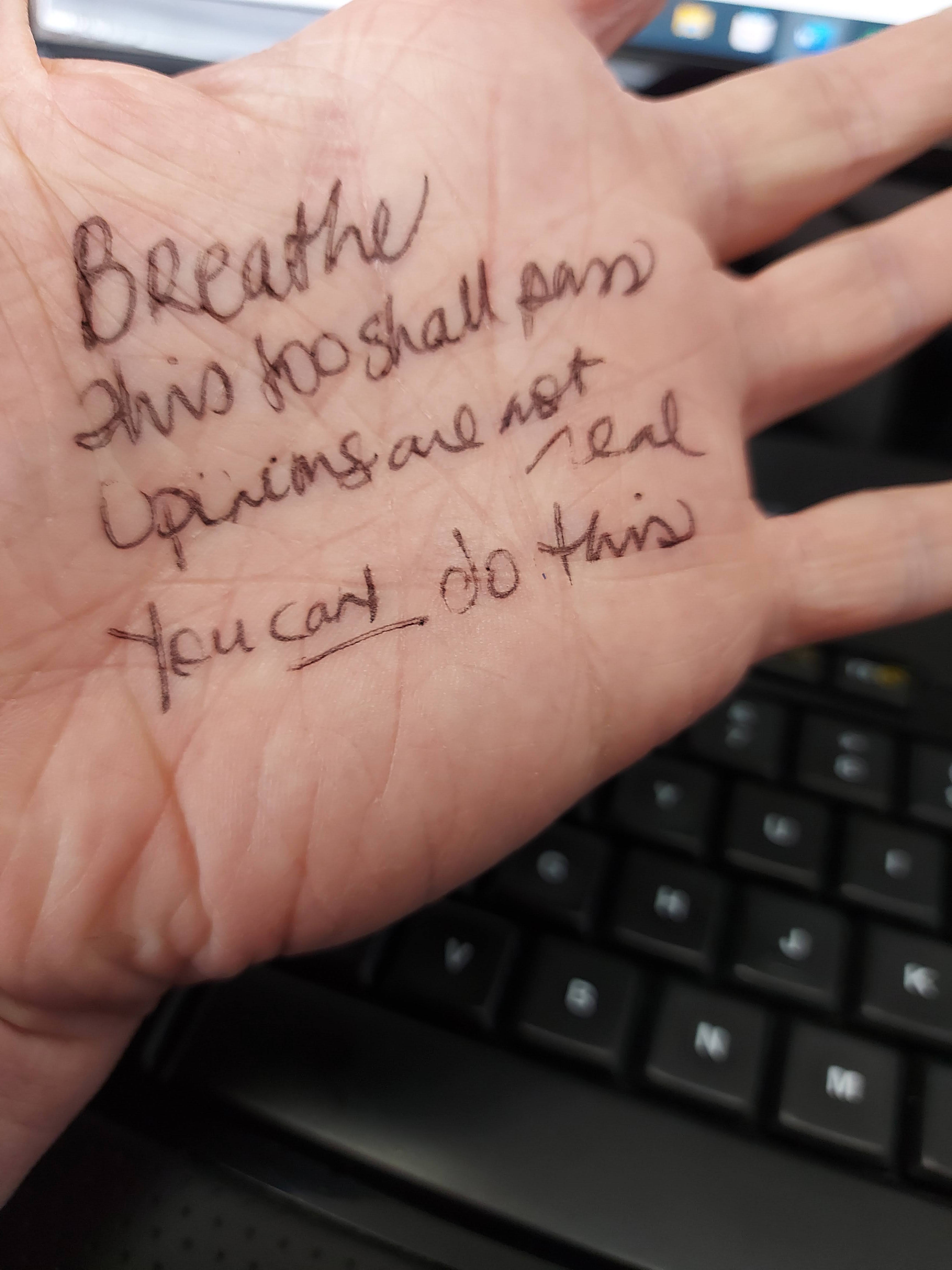
This meant consistently using tools like “pause and breathe to respond” or whatever I was going to use, to build the mental and emotional memory of the steps. Practice like this meant when I felt overwhelmed and there was no psychologist to step in, I had some routine to rely on.
2. Start the day for You, not for work.
Ok – I get it, we already get up early because there’s a lot to do. I used to count back the least amount of minutes from when I had to leave for work and set the alarm for 10 minutes before that so I could hit snooze once.
I had two kids to help get ready and off to school as well, so the mornings were full. I knew I had to get up, but … ugh! Why did I have to go to work so early?!
One morning I was hauling myself out of bed for what felt like the 17th time that week, I realised that it was a crap way to start the day. Since there was nothing I could do about what time my office opened, my kids started school, or my dog was scratching at the back door, maybe I needed to do something about my feelings about the morning.
I started chanting. Not a lot, 5 minutes or so. Sometimes I chanted in bed after I hit the snooze button, sometimes I got up and made tea and sat on my sofa and chanted deeply for 10 or 15 minutes.
It meant my day started with something that had zero things to do with someone else’s objectives, desires, or money. There is something deeply rebellious about getting up *to do something else* in a world that says we only matter if we are economically productive.
3. Just because you have done therapy, doesn't mean your new co-workers or leadership have.
I had this naïve view that returning to work in a team would have a similar sense of shared goals and a desire to do our best work for the people we were hired to provide services to. The company had its values posted and I got to watch “What does a respectful workplace look like” videosa
I had, in the two and a half years I had been out of the workforce, completely forgotten about office politics. Although I could now explain “emotional regulation” and “window of tolerance”, I had forgotten that people have their own motivations and objectives that I am not privy to or a part of.
Over time, it became increasingly difficult for me to ignore the disconnection of how people acted and how they spoke. I started to see myself acting in ways I wasn’t comfortable with as a part of this culture.
Once I remembered that my healing was not universal and I needed to start to account for that when interpreting how people were responding.
4. Trust your first impressions; verify with facts over time.
One of the most damaging effects of complex post traumatic stress disorder, for me at least, is making snap decisions without sober second thought. Followed closely by usually second guessing my first impressions because people who were supposed to be trustworthy weren’t.
This makes it very difficult to know who to trust, who I feel comfortable with, and when my ‘instincts’ are real or when it is my nervous system in overdrive. My initial feelings at my dream job were that I had landed in a focused, driven team who were working to create positive outcomes. I cried listening to one new colleague because of her passion.
I started the job believing my nerves would go away and everyone was who they said. Over time my questions started to go unanswered, project direction and timelines became harder to clarify.
As a result, I started to question my abilities. Again. Getting up in the mornings was ok, but getting out of the house only happened because I carpooled. “It’s happening again! I can’t believe I keep screwing up.” became an almost constant refrain some days as I struggled through conflicting advice.
It took me several months before I stopped realized that the constant twanging of my nerves was no longer “I’m new here” and way more “What the fuck is going on here?!” Could it be true that I am actually incompetent? Fortunately I had the final tool on this list, and it helped me be more objective.
5. Keep compliments and a list of successes to review when you feel unsure of your skills.
I call this my win list. It’s something I still use today, and is one of the biggest tools I have as an entrepreneur to refocus me.
One of the things we hear a lot growing up is “Think about what you’ve done!” when making a mistake. Or “I can’t believe you _____! You better make sure this never happens again.” So as children we learn to sit in our mistakes, we play them over and over again in our minds. We think about all the things we did, and how it was wrong (if we even understood it) and how to avoid being ‘bad’ in the future.
At some point while working out how to have a fulfilling life with complex trauma, I pulled out some journals from when I was quitting drinking in 2018. At the back of the book was the win list: a list of things I have done that I am proud of and why. It included things like moving to the UK by myself, presenting a paper at the UN Sienna Group.
I started reading the list and it brought back all the good feelings of having done something really hard. I found myself smiling and feeling the pride in my accomplishments that somehow I forgot when I was all wrapped up in how to not be wrong or make mistakes.
This was a revelation! I thought about the strengths I showed in achieving those goals. I found myself visualising the steps I took to complete what felt impossible when I started. I discovered sitting in positive feelings made me feel like I could accomplish cool things.
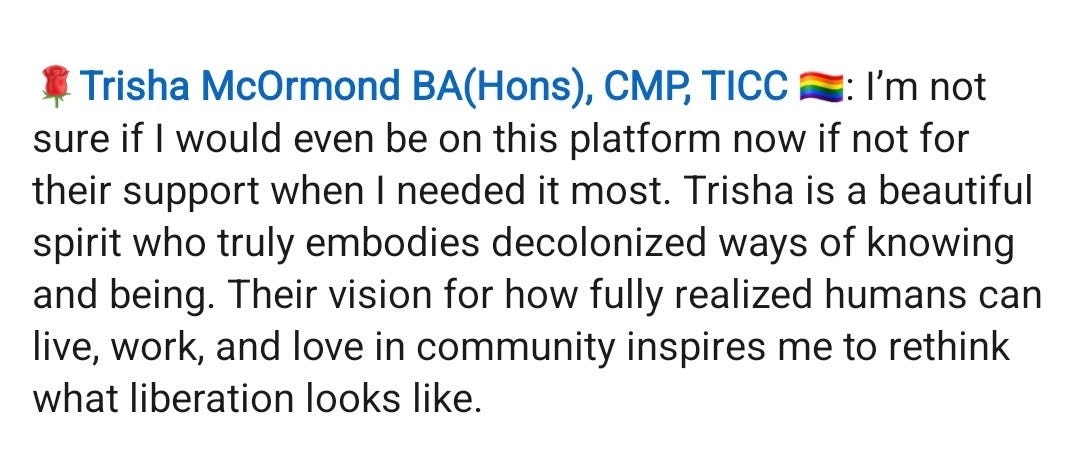
Things like this compliment are a direct contrast to the “What did I do wrong?” feeling that left me feeling all twisted up inside and wondering if there was something wrong with me that I couldn’t figure out what people wanted. The fear of making a mistake got in the way of my creativity.
I decided maybe ‘reflecting on how to be better’ could be replaced with “Wow!! Look at what I did right. Look at the strength I demonstrated in these moments.” The most remarkable thing about this shift was the boost in my self-image I experienced. I was willing to take on more challenging tasks and meet more people without feeling like I needed to hide.
Was the pain worth it?
Yes. Every painful, glorious, sweaty minute. Mostly.
Being a contributing and valuable part of the community we live in is something everyone wants. In fact, labour market connection – that is, having a job that you believe makes life better for your friends and neighbours – is a key indicator of mental wellbeing. So in the journey through complex trauma, losing that connection made me feel like I was no longer able to meaningfully contribute.
My self-esteem tanked.
Learning how to create a firm sense of who I am and what future I want to be a part of creating through my work helped me rebuild it one step at a time. Sometimes those steps were baby steps, and other times I was wearing seven-league boots.
I learned our workplaces are not going to change overnight and change will only come if people who have experienced the impact of toxic workplaces stand up and start to talk about their experiences as advocates for change.
Without change we are all facing an increasingly depressing future of work. Why is it that most people dislike their jobs, or speak openly about burnout and stress and feeling disengaged? Why are we spending so much of our time like this?
We cannot change what we do not acknowledge, and it is increasingly clear: workplace and labour market culture is failing the majority of workers. And as it fails workers, it fails our families and our communities.
There are a lot of people, many of them influencers, who suggest the path for change is to leave employment and become self-employed. Or start a side-hustle and create “F@ck You! money” so you can quit if you want. But this is NOT feasible for a lot of people. (and have you noticed how many of them are men?, but I digress.)
It was not, for example, feasible for me when I was a raising two toddlers and trying to figure out how to make my paycheque and my month have a more functional relationship. Starting a side hustle on top of that, while taking care of my kids, was not advice that had any relevance to me.
What I needed was a healthy workplace, with processes and systems that support a culture of wellbeing for all of us, not preserving the status quo. What we all need is work that builds not destroys the communities we call home. If we exclude ourselves because we were injured, we remove our contributions and take away our own power in creating our future.
Building an economy that works for all of us means we have to be active participants in the economy. If you have CPTSD that can feel scary and overwhelming because it is often treated like a life-sentence to disability. It's not. I have learned it can be the gateway to a career that is both fulfilling and healing when you believe this is possible.
Just remember:
1. Practice your tools in safe social situations before you need them in real life
2. Start your day for You, not for work
3. Just because you have done therapy, doesn't mean your new co-workers or leadership have.
4. Trust your first impressions; verify with facts over time.
5. Win List! Write out times in the past you have been successful. Review this when you feel unsure of your skills.
Great article. So much to think about but I especially love how the Win List can ground us back to what’s true and help redirect our focus and energy. I really see the value in this. Thank you!
“I do know the more I focused on revenge, the harder it was to create a life I liked.” This just made me stop and ponder. For those of us who have been “much too kind” when the red flags were there, or took on the extra when others didn’t, it makes me think about those feelings: boundaries aren’t revenge, they’re steps towards self-kindness. Releasing draining relationships isn’t being cruel, it’s creating space for our growth and more. And when we wish to create a life we like, the options are in front of us, as we do our own growing and healing, in the ways that become clear. Still thinking on this. :)