


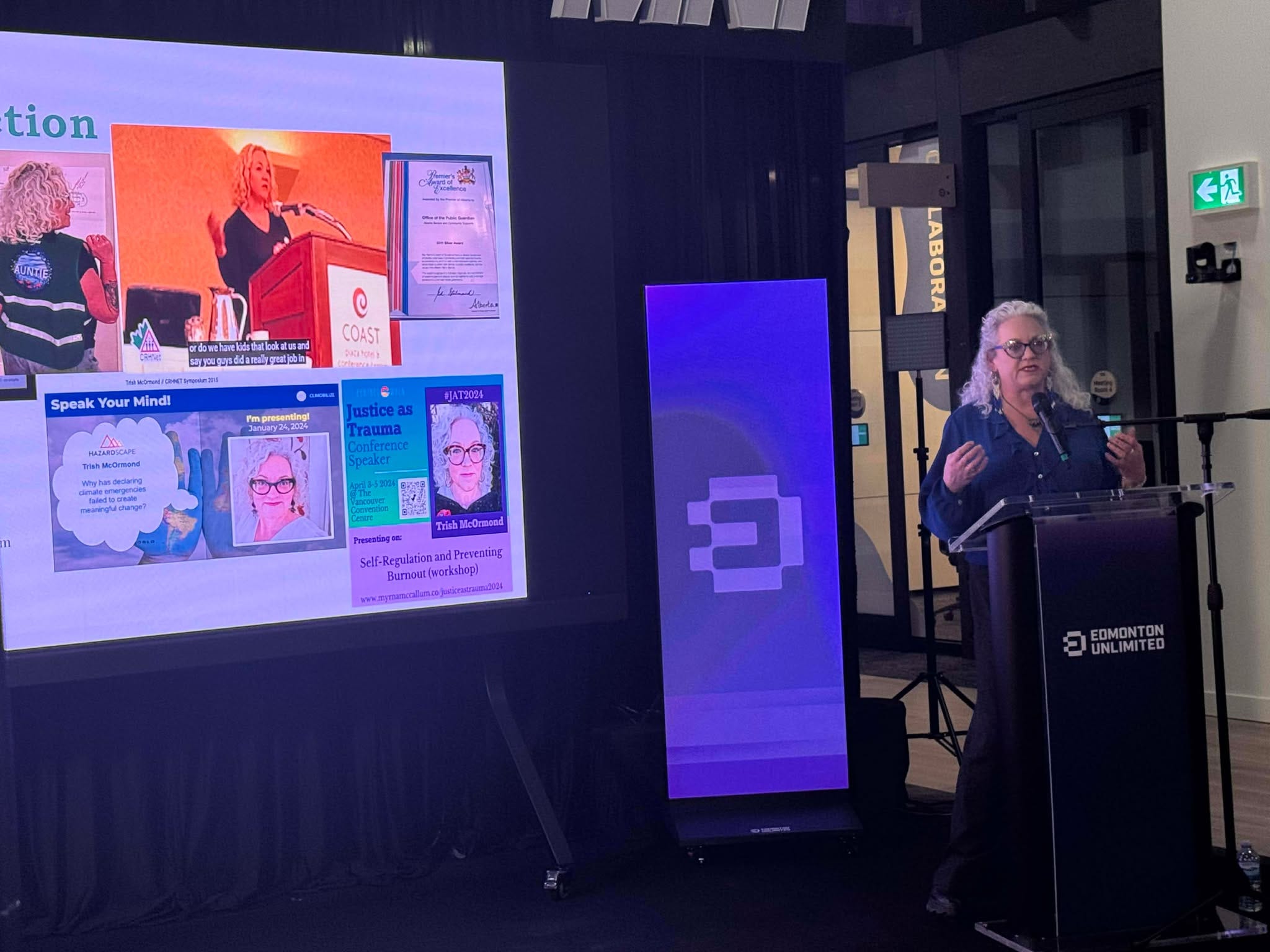
On Wednesday night I did my first-ever business pitch. I’d spoken before, but not pitched but I’d been feeling adrift in my business for a while so had no idea what I was going to pitch at the end of what was supposed to be a 6-month mastermind.
All I knew was I needed clarity in my direction or I was going to have to find a job. Not because I couldn’t pay my bills, or didn’t like the work I was doing. Rather, there was a hole in my day that was affecting my wellbeing: I was growing increasingly isolated and disconnected from my community, even while the work I loved doing is in part about building healthy communities.
Lesson 1: There is a difference between isolation and separation: one can make your life more fulfilling, one will drain you.
When I worked in an office, my work life was separated from my social and family life by location and who I spent time with in each. This separation of work from my personal life created opportunities for self-reflection, hearing different opinions, and finding commonalities with people who didn’t know me outside of work.
It also created growing tension as increasingly decisions by my leadership were not aligned with my values and I was being asked to execute on things I knew were potentially harmful to our communities with little recourse for change. So I left.
Which led to isolation. I didn’t understand how to create an effective separation from work and personal life, so increasingly (in part because I work a lot) my personal life disappeared because I could always work.
Eventually I looked up and realized that I hadn’t done something not work-related for almost a year. And that isolation from my community was showing up in my work because I was feeling increasingly unable to connect with people in social situations.
Learning the difference between isolating from others and creating a separate time and space to work on my business was not intuitive, and it took some time which leads to my second lesson.
Lesson 2: Success requires discernment: Doing business in a good way involves compromise
About four days before I was to do my pitch, a friend I hadn’t spoken to in several months called. They asked “Have you heard what’s going on? Are you still going to pitch on Wednesday?”
There had been a few events in the recent weeks that created a bit of stir in our community and I had sat with whether or not I should pitch in the days before this call but still I was caught a bit off-guard.
After consulting with some colleagues, I made the decision to pitch rather than withdraw ‘on principle’. This is why:
There were other people pitching who were relying on me. Behind the scenes drama is not sufficient to break my commitment to my peers
Opportunities to pitch are new to me, and I could not say with complete honesty that I was not withdrawing because I was afraid and using external events as an excuse
My business idea is a good idea that needs to be heard - but I am never going to find someone with whom I am in 100% alignment, so I need to be discerning about what I compromise on
The background drama did not compromise my core values
I would no longer allow the perfect be the enemy of the good.
I have non-negotiables in my life that are part of my decision-making process. The background drama mattered but what mattered more was the people I was doing the pitch night with and the relationships the experience built. The commitment we had made to support each other through the process.
I cannot, nor should I try to, control people and their actions. All I can do is make sure my actions align with my values in the situation I found myself in. Recognising the limits to my control and how I show up strengthened my commitment to and ability for discernment.
Finding the courage to pitch was the first hurdle. Now I had to figure out what to pitch. For years, I had been carrying an idea around but felt a bit embarrassed to share it. In the days leading up to the event though I started to trust my dream because I felt safe in what I know.
Lesson 3: When we feel safe we are capable of more than we believe
I did my pitch on an idea I have been carrying around for years, but didn’t understand how to actually start. I did not go to the pitch night with what is currently paying my bills, but rather a vision of what we could do.
My idea started small: a seminar for communities on how to create healthier personal practices and resilient workplaces, with a focus on Indigenous Systemic Design. A full day maybe, something to introduce the concepts to organizations and leadership.
As I developed it however, it grew. I started to dream about what might be possible if I went beyond seminars and teaching, to incorporating the work of Judith Herman and the practices of trauma-informed community development. What if I actually put into practice the Indigenous principle of miyo pimatisiwin (a good life in a good way) and trusted Creator?
The program I built goes beyond what I thought possible at the beginning. My Elder has given me her blessing and I have gained clarity how to execute on my ideas.
This makes it sound like once I knew what to do, it was easy-peasy and just a matter of putting the words on the paper, but that is not the case. I ended up looking perfectionism right smack in the face.
Lesson 4: Let the game come to you
This is from an old Queen Latifah movie “Taxi” when she teaches Jimmy Fallon how to overcome his driving anxiety. It was something that helped me navigate being a new mum and then I forgot this saying and moved on.
Until I began building my pitch and found myself chasing ideas, chasing the right look, trying to be the kind of person who was good at pitching. The more I acted this way, the harder it became to actually build a deck that did justice to what I wanted to say.
I was focused on form, not function and getting more lost by the hour.
As soon as I took a breath and reminded myself I knew my topic (see below), that the service is needed, and the only people there who mattered were me and my kid, I felt empowered. I decided I could say whatever pleased me since I was doing this for me, and no one else, and things began to shift.
It didn’t become easy, but it became less hard - something that was in the realm of possible. And every time I leaned into what I know, options started to present themselves for the next step.
Lesson 5: Play to your strengths, use them to overcome your weaknesses
One of my strengths is strategy and pattern recognition, one of my weaknesses is overthinking and so I had to learn:
When to stop thinking and start doing
How to stop thinking so I could start doing
I reviewed when I worked well and when I didn’t and discovered I needed an interruptor when I was doing research. The issue wasn’t I didn’t know how to execute, procrastination or “analysis paralysis” rather it was my brain diving deeply into a topic I love and wanting to understand nuance.
To provide value I also have to have customers. So just like when I began coaching, and had to learn how to tell people what I do, when building workshops I realised I needed to interrupt my desire to learn more. So I built a plan
I created two roles for myself: research assistant and writer/editor
Set a timer for research and note taking on my computer is required.
When the timer goes off, the research assistant takes a break
I get up, get a drink of water, turn on my music and sit down and edit my notes into necessary format
The auditory cue identified it was time to transition to a new task, and this kept me from getting lost in research. The key is to make sure I do both parts together. I cannot research one topic and then another successfully, instead I need to write as soon as I am done the research. (I endured several stressful weeks thinking I could do separate research days and writing days.)
My strategic thinking brain was able to see the patterns, identify an interruptor, and then plan to execute so when my research brain took over, it could only be in the leadership position for so long.
Start to notice where you get stuck, what you get stuck doing, and then when work flows. Then find ways to shift your mental state so you are able to signal when it is time to change roles.
Final Thoughts: Do the cobbler’s children have shoes?
There is a lot of work that needs to happen on my business to make my business work. A long time ago, my mum was a social worker and after a few months she stopped being a social worker. When I asked her why, she said “The cobbler’s children have no shoes” and never elaborated.
Over the years that line’s popped into my head several times but until doing this pitch I really didn’t get it. She meant that many of her colleagues expected of their clients behaviours and outcomes that the social workers themselves could not achieve.
The standard they had for others was not one they themselves met, not just professionally but in their daily life. People demanded parents never have dirty dishes in their sink while having the entire unit’s spoon collection dirty in their desk drawer.
Doing my pitch reminded me, when starting something new or hard, the things I tell people to do are also things I need to do. Not just when doing something new like a pitch, but regularly so I continue to learn and grow.
I need to challenge my routine, question my assumptions, create opportunities for reflection rather than just blindly, doggedly following previous success and expecting different results. Trying new things doesn’t always take new tactics, but it does take deploying tactics in new ways.
What I learned:
1: There is a difference between isolation and separation: one can make your life more fulfilling, one will drain you.
2: Success requires discernment: Doing business in a good way involves compromise
3: When we feel safe we are capable of more than we believe
4: Let the game come to you
5: Play to your strengths, use them to overcome your weaknesses
You Probably Want to Know: What happened with the pitch!?
It went well - better than expected. I got the words out, in order, and covered the material I wanted to cover. I stood up and shared my vision. I trusted my preparation, I spoke from my expertise, grounded in my ‘why’. The pitch may have been the goal, but the trip that taught me what I had previously missed: I wasn’t doing the work I needed to do.
So: I had a blast and I shared the stage with powerful Indigenous entrepreneurs, made connections with people in the audience, and have already set up two meetings to continue talking about what I am building. And yes, I started by telling people my experience, how awesome I am, and the person it mattered to the most was me.
I also realized that regardless of what happens next I am happy. I want to do more scary things, learn what else I can accomplish in the service of what matters to me.
I always appreciate the self awareness in your writing. Thank you for sharing these insights and discoveries.